
Energy savings do not always start with new equipment. NHR's Booster Pumping Station Energy Optimization Platform uses existing equipment and operating records to analyze motor efficiency and distribute workloads across units. Its purpose is to reduce the electricity needed to meet the station's water-supply requirements—not to save energy by delivering less water.
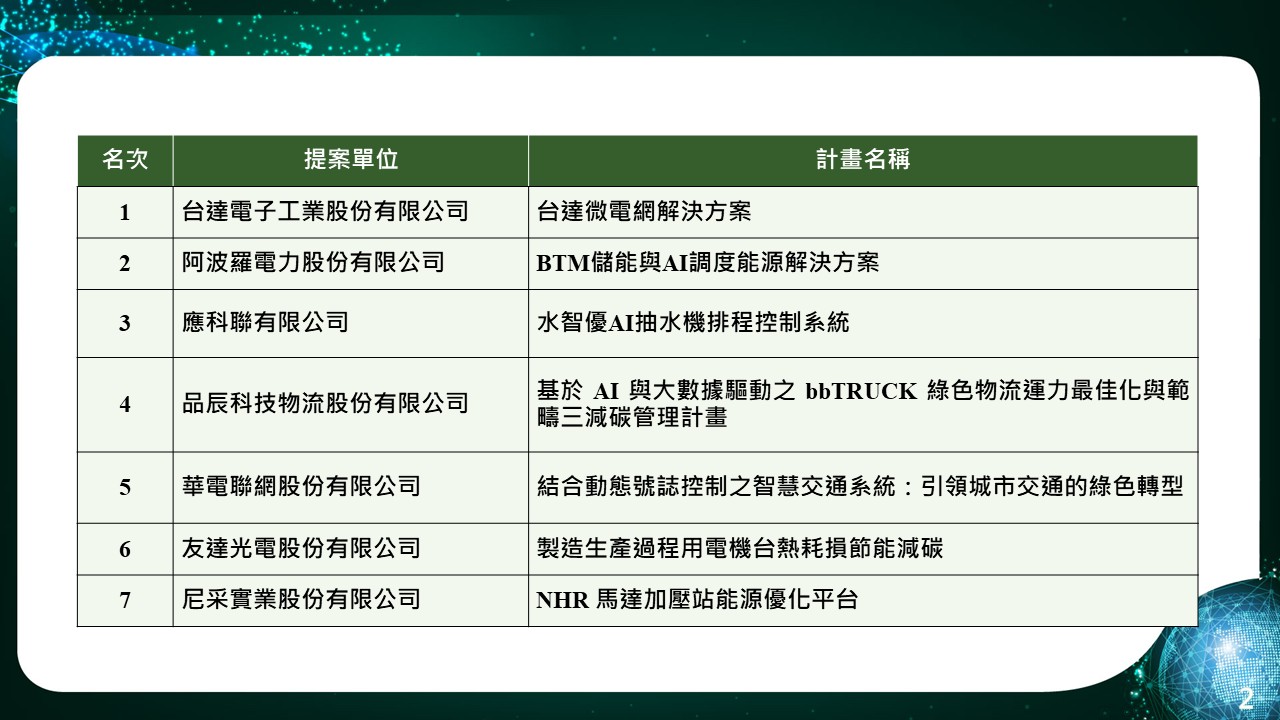
Nietzsche Enterprise Co., Ltd. is one of seven Taiwanese companies selected under the Ministry of Environment's Digital × Green Twin Transformation — Call for Digital Solutions programme. The official announcement, published on August 10, 2026, and the selected-solutions list identify NHR and its platform as entering the EGDC assessment process. Selection is an assessment milestone, not completed verification.
Look for efficiency in the equipment already on site
A pumping station's job is to deliver water, not to run every motor at maximum output. Several combinations of equipment and load may meet the same demand, but they need not consume the same amount of electricity. Knowing that a motor is operating normally does not establish whether the station is using its energy efficiently.
For the deployment described by NHR, no additional equipment is required. The platform analyzes existing operating data to understand motor performance, power use and workload distribution. The investment discussion therefore starts with better use of existing assets, rather than hardware expansion.
No added equipment does not mean no data. Electricity, delivered volume, equipment-performance information and operating records remain essential inputs. Their completeness and consistency need to be checked before analysis begins.
Full load is not necessarily the most efficient operating point
Consider an illustrative example: a motor consumes more power at full load, while a point around 78% load may offer better operating efficiency. The platform's task is to identify the efficient range for the equipment and conditions in question, rather than treating maximum output as the default objective.
The 78% figure is an explanatory example, not a universal motor setting or a published measured optimum for this project. Pump performance, pressure, demand and available units all matter. Simply reducing one motor's output does not establish that the whole station will use less electricity while maintaining water delivery.
The useful question is how to allocate the work across the available equipment. Comparing feasible combinations helps operators choose lower-energy schedules that still satisfy delivery requirements. Actual records then show how those decisions performed. The objective is more efficient water supply, not reduced service.
Turn performance analysis into operating recommendations
NHR's submitted architecture combines AI assistance with engineering methods. AI helps predict delivered volume, power and specific energy consumption for feasible motor-pump and speed combinations. Mathematical optimization generates and ranks recommendations.
Those recommendations must respect equipment availability, delivery requirements and project-specific speed, level, pressure and safety limits. Operators review the options and retain final decision authority. After implementation, electricity and delivery records provide feedback for further adjustment. The platform supports efficient operation; it does not replace safety controls or operator responsibility.

Conceptual diagram, not a live interface, efficiency curve or measured result. Suitability depends on existing data and site conditions.
What does an improvement close to 10% mean?
NHR's case submission compares two complete annual periods. Delivered volume increased by 0.88%, electricity use fell by 9.20%, and electricity per cubic metre declined from 0.3815 to 0.3434 kWh/m³—a 9.99% improvement. The practical point is that the station delivered more water while requiring less electricity for each unit delivered.
These are NHR-provided case reference results using the submission's utility-billing measurement boundary. They are not completed EGDC verification findings or a performance guarantee for another facility.
Lower electricity consumption creates an opportunity to reduce operating costs. However, energy savings, specific-energy improvement and the reduction in a customer's bill are different measures. Actual cost savings depend on tariffs, billing periods and charging structures. The 9.99% figure should not automatically be presented as a universal reduction in electricity bills.
Connect energy performance to ESG with traceable calculations
For customers interested in ESG, the platform also presents calculated carbon reductions. NHR describes these figures as based on defined calculation methods and supporting data, rather than an unexplained percentage on a screen.
For electricity-related emissions, the basic relationship is comparable electricity savings multiplied by an applicable electricity emission factor. Where water delivery differs between periods, the calculation must address that workload difference using a stated approach. Records should identify the periods, data sources, baseline method, factor year and scope so operations and sustainability teams can trace the result.
An electricity-emissions estimate is not the complete net carbon impact of a digital solution. EGDC's methodology also considers the solution's own footprint and relevant positive and negative effects. NHR's selection provides an opportunity for further assessment; platform calculations, applicant-reported results and formal assessment conclusions remain distinct. EGDC methodology
Begin with existing assets and available records
An initial discussion should establish whether the equipment still offers room for operational improvement. Multiple feasible motor or pump combinations, comparable electricity and water records, and clear operating limits provide a practical starting point. Related transfer, process-circulation or cooling-water applications can also be discussed, but are not presented here as deployed or verified extensions.
Facility teams, system integrators and energy managers can start with their equipment configuration, electricity and delivered-volume records, current operating approach, and supply or pressure constraints. Contact NHR to assess whether existing data can support the analysis, how a no-added-equipment approach could apply, and how energy, cost and carbon outcomes should be calculated separately.
Frequently asked questions
Is additional equipment required?
Not for the deployment described by NHR: the platform analyzes existing equipment and operating records. A new site still needs a review of data availability and interfaces.
Should every motor operate at 78% load?
No. It is an illustration of why peak efficiency need not occur at full load. The appropriate range depends on the motor, pump, workload and water-supply conditions.
What does the near-10% figure represent?
The cited case reports a 9.99% improvement in electricity per unit of water delivered, alongside 0.88% more delivered volume and 9.20% less electricity. Bill savings require a separate tariff-based calculation. These results are not EGDC-verified figures.
Does a carbon figure mean certification or carbon credits?
No. The platform provides method- and data-based carbon calculations. These are not carbon credits, certification or completed EGDC verification.
Official announcement and references

Official selection list published on 10 August 2026. Item 7 lists Nietzsche Enterprise Co., Ltd. and the NHR motor booster-station energy optimisation platform. This is a selection announcement, not a completed EGDC verification certificate.
Image source: programme announcement published by TCA for the Ministry of Environment. The official image and logos are reproduced without alteration.
- Official selection-results announcement — Taiwan Ministry of Environment's Digital × Green Twin Transformation — Call for Digital Solutions programme, published on August 10, 2026. Original announcement in Chinese.
- Official selected-solutions list (image) — Zoom in to see the officially published company and solution names: 尼采實業股份有限公司 and NHR 馬達加壓站能源優化平台.
- NHR, Booster Pumping Station Energy Optimization Platform — Supporting Evidence, v5.0: project architecture and applicant-provided case reference results, not independent verification.
- NHR platform and application clarification, September 7, 2026: existing-equipment approach, load allocation and carbon-calculation role. The 78% figure is illustrative.
- EGDC Net Carbon Impact Assessment Methodology: distinction between electricity-emissions estimates and net solution impact.
Assessment status as of September 7, 2026: NHR is one of seven selected Taiwanese companies and has entered the EGDC assessment process. Subsequent statements must follow formal conclusions and the information authorized for release.